


Your iced coffee is inside the tumbler, but a wet ring is spreading across your desk. Why does one cup collect droplets while another stays dry?
Tumblers sweat when water vapour in the air condenses on a cold outer surface. A single-wall cup cools down quickly on the outside. Vacuum insulation slows heat transfer, helping the outer wall stay closer to room temperature and reducing condensation.
What causes condensation on a tumbler?
Air contains water vapour. When the outside of your cup falls below the surrounding air's dew point—the temperature at which that vapour starts turning into liquid—droplets form on the surface.
The water comes from the air, so it can appear even when the cup has no leak. Humidity matters too: in more humid air, condensation can form on surfaces that would stay dry in drier conditions. An iced drink and a humid afternoon make it especially noticeable.
Single-wall vs double-wall vacuum tumblers
With a single-wall tumbler, one layer of material separates your drink from the air around it. Heat moves through that wall into the colder drink, cooling the outside enough for condensation to form.
A vacuum-insulated tumbler has two walls with most of the air removed from the space between them. This greatly reduces heat transfer through that gap. Your drink warms more slowly, while the outer wall stays closer to the surrounding temperature.
Double-wall does not always mean vacuum-insulated. Some cups have an air gap rather than a vacuum. Check the product specifications if reducing condensation is a priority.
For a closer look at the construction, read our guide to how double-wall vacuum insulation works.
Is your tumbler sweating or leaking?
Where the moisture appears can help you narrow down the cause:
- Fine droplets across the cold body: usually condensation, particularly with an iced drink in humid conditions.
- Liquid returning at a lid seam or opening: may be a spill or leak. Check that the lid is fitted correctly and the seal is clean and seated properly.
- Moisture around the rim or lid: can also be condensation, because these parts may have less insulation than the body.
Wipe the tumbler dry, leave it upright on a dry surface and watch where the moisture returns. This is a useful first check, though location alone cannot confirm the cause.
Can a vacuum-insulated tumbler still sweat?
Yes. Vacuum insulation reduces condensation on the main body, but it does not guarantee that every part will stay dry in every setting. The lid, rim and straw opening can still become cold enough to collect moisture, especially when humidity is high.
A little condensation around the lid does not necessarily mean the insulation has failed. If the main body repeatedly becomes unusually cold and wet, and the drink also warms much faster than it used to under similar conditions, contact the manufacturer for advice.
How to reduce water rings and a damp grip
- Choose vacuum insulation: look for an explicit vacuum-insulated specification, rather than relying on the material or appearance alone.
- Use a coaster: it catches occasional droplets and helps protect surfaces from water marks.
- Dry the cup after filling: splashes left on the outside can look like condensation later.
- Check the lid and seal: a secure fit helps reduce leaks, although it cannot stop moisture from condensing on a cold surface.
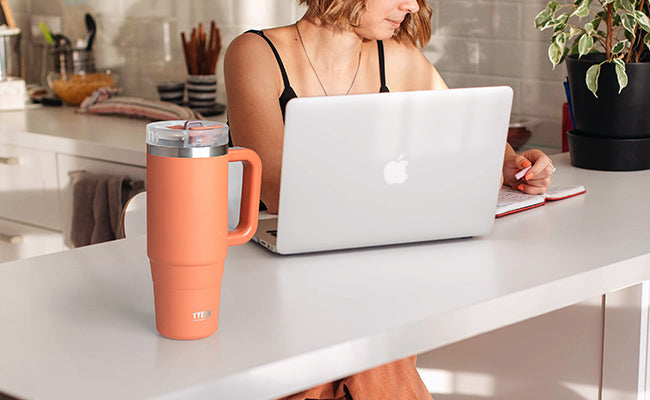
Even with an insulated cup, leave some space between your drink and laptops, paperwork or other items that should stay dry.
Choose a tumbler that fits your day
Insulation is one part of the choice. Capacity, the lid and how you carry your drink also affect how useful a tumbler feels day to day.
For coffee breaks and shorter commutes: FLAIR 2.0
The TYESO FLAIR 2.0 Retractable Straw Tumbler comes in 16 oz and 20 oz sizes, with a retractable straw and double-wall vacuum insulation. It is a practical option for desk use and shorter trips when refilling is easy.
For fewer refills: AURA
The TYESO AURA Insulated Travel Tumbler offers 30 oz and 40 oz capacities. Consider it if you prefer to carry more water or an iced drink from the start, and check the dimensions against your bag or cup holder before choosing a size.

What to remember when buying a tumbler
A sweating cup usually means its outer surface is cold enough for moisture in the air to condense. Vacuum insulation helps keep that surface warmer and your drink colder, reducing water on the main body. Look for a clear insulation specification, then choose a capacity and lid that suit the way you drink.


